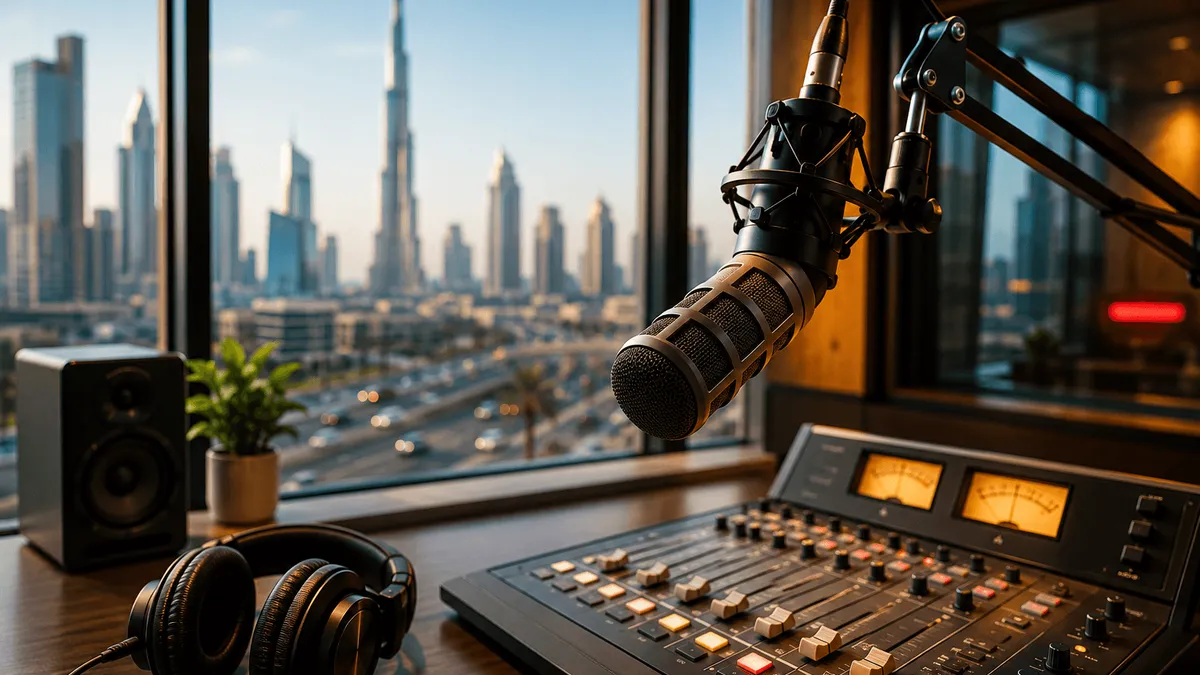
Dubai's radio market offers international brands an opportunity to reach consumers across a diverse commercial environment. From business executives and working professionals to families and expatriate communities, radio connects with audiences during their daily routines.
According to Nielsen's UAE Radio Audience Measurement report, radio reached 92% of the UAE population aged 10 and above during the first quarter of 2020, with more than 57 million hours of listening recorded each week.
While these figures provide historical context, marketing leaders should request current audience data before making investment decisions.
For global CMOs entering Dubai or expanding their presence in the UAE, understanding the local broadcasting market is essential to developing an effective campaign.
1. Understand Dubai's Multicultural Radio Audience
Dubai is home to consumers from numerous nationalities, with different languages, cultural backgrounds and purchasing behaviours.
Radio stations serve distinct audience segments through music, entertainment, business news and local programming.
International brands should evaluate several audience characteristics before selecting stations:
- Age and income groups
- Language preferences
- Professional backgrounds
- Consumer interests and purchasing behaviour
- Listening habits throughout the day
- Geographic distribution across the UAE
A financial services company targeting senior professionals may require a different station mix from a retailer promoting products to families.
Audience relevance should guide media selection from the beginning.
2. Choose Radio Stations That Align With Business Objectives
Dubai has an established network of radio stations serving English, Arabic and South Asian audiences.
English Language Radio Stations
Stations such as Dubai Eye 103.8, Virgin Radio 104.4 and Dubai 92 offer different programming environments for English speaking audiences.
Dubai Eye's business programming may be relevant to financial institutions, technology companies and professional services firms. Entertainment stations can support consumer campaigns, product launches and retail promotions.
Arabic Language Radio Stations
Stations such as Al Arabiya 99 and Al Khaleejiya 100.9 provide opportunities to connect with Arabic speaking consumers through culturally relevant programming.
South Asian Radio Stations
City 1016 and Radio Mirchi 1024 serve audiences interested in South Asian music and entertainment. These stations may be relevant to retailers, telecommunications companies, remittance providers and travel brands.
Station selection should be supported by recent audience research and commercial objectives.
3. Identify the Right Broadcasting Times
The timing of a radio campaign can influence its reach, frequency and relevance.
Although morning and evening commuting hours are important, Dubai's listening patterns extend throughout the day.
Historical Nielsen audience research found that radio between 8 pm and midnight reached larger audiences than morning or drive time periods during the fourth quarter of 2018.
CMOs should assess the commercial relevance of different broadcasting periods:
- Morning: Reach professionals and families during their daily routines.
- Afternoon: Connect with audiences travelling, shopping or completing everyday activities.
- Evening: Reach commuters and consumers travelling towards leisure and dining destinations.
- Late evening: Maintain visibility among audiences listening at home or travelling after work.
Current station data should determine the final broadcasting schedule.
4. Select Advertising Formats Based on Campaign Goals
Brands investing in radio ads can explore several formats depending on their objectives, budgets and audience requirements.
Standard Radio Commercials
Recorded commercials can communicate product benefits, promotional offers and brand messages. They are commonly available in durations of 15, 30 or 60 seconds.
Presenter Endorsements
Approved presenter endorsements can introduce products and services through a familiar voice within established programming.
Programme Sponsorships
Brands can sponsor business news, weather reports, traffic updates or entertainment segments, subject to station availability.
Branded Competitions
Competitions can encourage audience participation, support product awareness and generate measurable engagement.
The chosen format should reflect the brand's positioning and the level of audience interaction required.
5. Adapt Audio Creative for the UAE Market
International brands should consider local language preferences and cultural expectations when developing audio campaigns.
A commercial produced for the UK or United States may require adjustments before broadcasting in Dubai.
Effective audio creative should:
- Focus on one central message
- Use clear and natural language
- Feature an appropriate voice and tone
- Include a memorable brand name
- Communicate a clear call to action
- Respect local cultural values and sensitivities
Brands targeting multiple language groups should consider producing separate creative versions. Local voice artists and professional translation can help preserve the intended meaning and brand identity.
6. Understand Radio Advertising Costs in Dubai
Radio campaign costs vary depending on the station, commercial duration, broadcasting period, frequency and campaign length.
Marketing teams should evaluate the complete investment, including media bookings, script development, voice recording, audio production and language adaptations.
When comparing proposals, CMOs should request estimated audience reach, frequency, broadcasting schedules and programme details.
A structured media plan should establish sufficient repetition among priority audiences while managing the overall cost of reaching potential customers.
7. Consider Local Advertising Regulations and Approvals
Radio commercials must comply with applicable UAE media regulations and broadcaster requirements.
International brands should review product claims, promotional terms, cultural references and industry specific restrictions before submitting creative for approval.
Sectors such as financial services, healthcare and real estate may require additional regulatory checks or permissions.
Marketing teams should consult the relevant requirements of the UAE Media Council and coordinate with their media partners before confirming campaign launch dates.
8. Measure Radio Campaign Performance Against Commercial Objectives
Radio should form part of a wider marketing measurement strategy. CMOs need to understand how their investment contributes to brand awareness, consumer engagement and business growth.
Relevant performance indicators include:
- Estimated audience reach and frequency.
- Verified commercial broadcasts.
- Brand awareness and advertising recall.
- Growth in branded search activity.
- Website traffic and customer enquiries.
- Promotional code redemptions.
- Incremental sales and customer acquisition.
Dedicated landing pages, campaign specific telephone numbers and geographic control groups can help businesses assess campaign contribution.
Integrating radio with paid search, social media and outdoor campaigns can also support a consistent brand experience across multiple consumer touchpoints.